Travelling for a month through Japan with printmaking in mind, I kept returning to one idea: the joy of monoprinting using gel plates, and how perfectly it would fit into so many different creative lives and creative corners.
Through conversations with printmakers I met along the way, I began to understand just how thoughtfully many artists work within limited space. So many create remarkable work from kitchen tables, compact home studios, or carefully organised corners of shared workshops.
Everything has its place, and nothing is wasted.
I have to confess, I came home looking at my own studio very differently. Back in Australia, I have the luxury of a sprawling space, and if I’m honest, I felt a quiet embarrassment at just how much room I have in comparison. These artists were producing extraordinary work from such modest setups, reminding me that creativity is never about square metres; it’s about intention, focus, and making use of what you have.
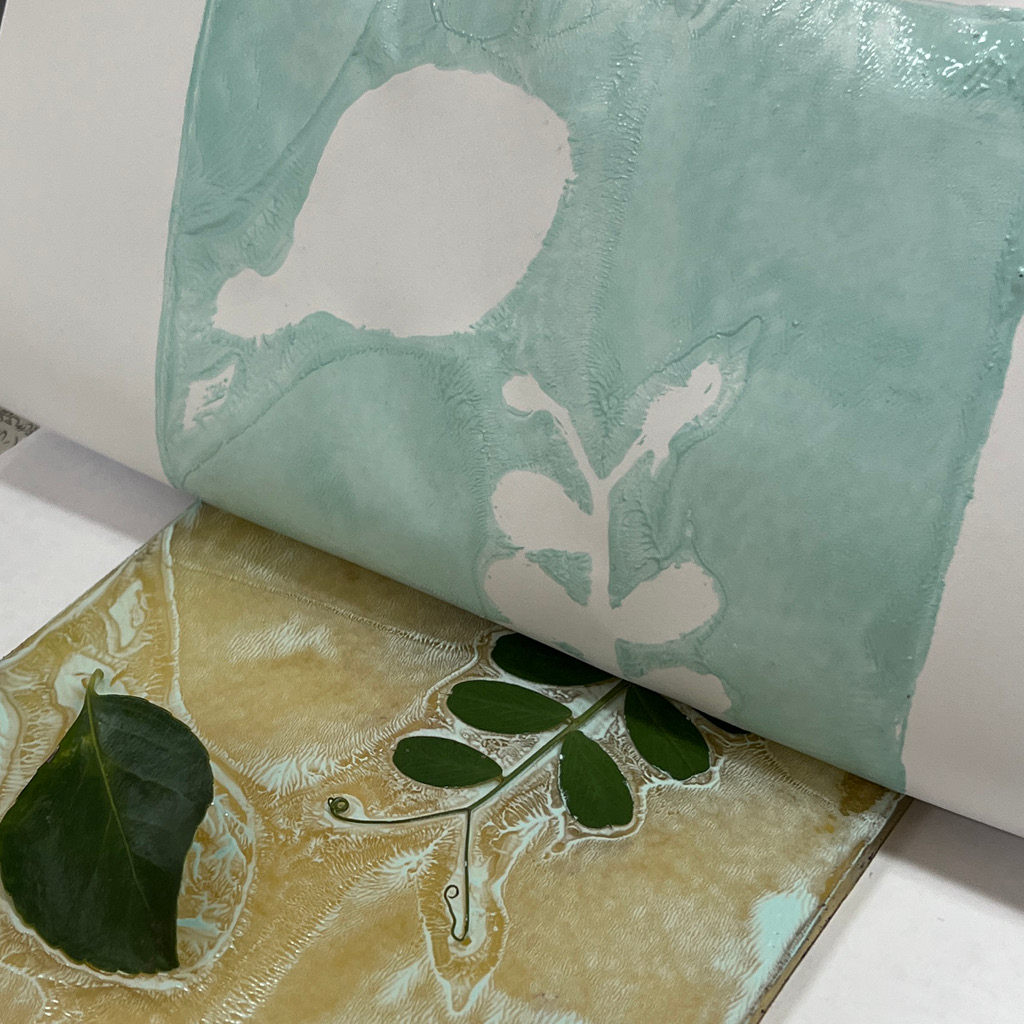
It reinforced something I already knew deep down: gel plate printing is one of the most accessible forms of printmaking. You don’t need a press, a large studio, or expensive equipment. A gel plate, a brayer, some ink, and paper are enough to unlock a world of colour, texture, and experimentation. It felt like the perfect medium for artists working in smaller spaces, while still wanting to explore bold and expressive techniques.
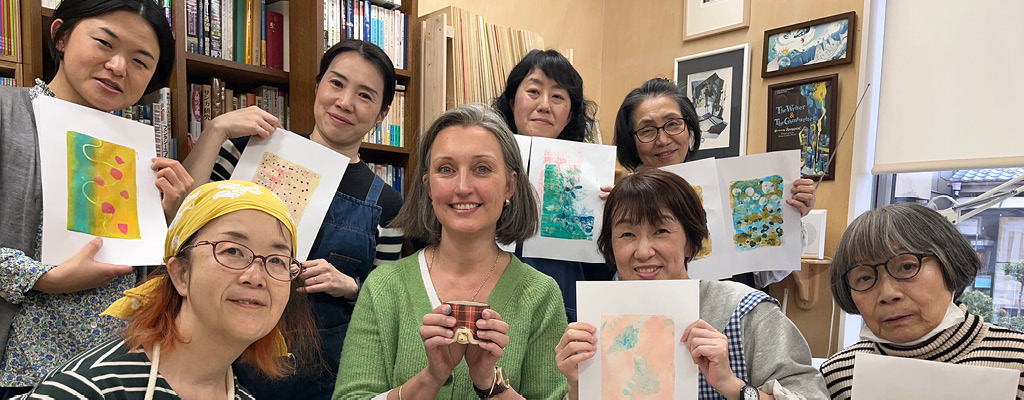
So when I reached out to a group of printmakers in Kokubunji in Tokyo, who welcomed my proposal and invited me to teach in their studio, it felt like a natural extension of everything I had been learning along the way.
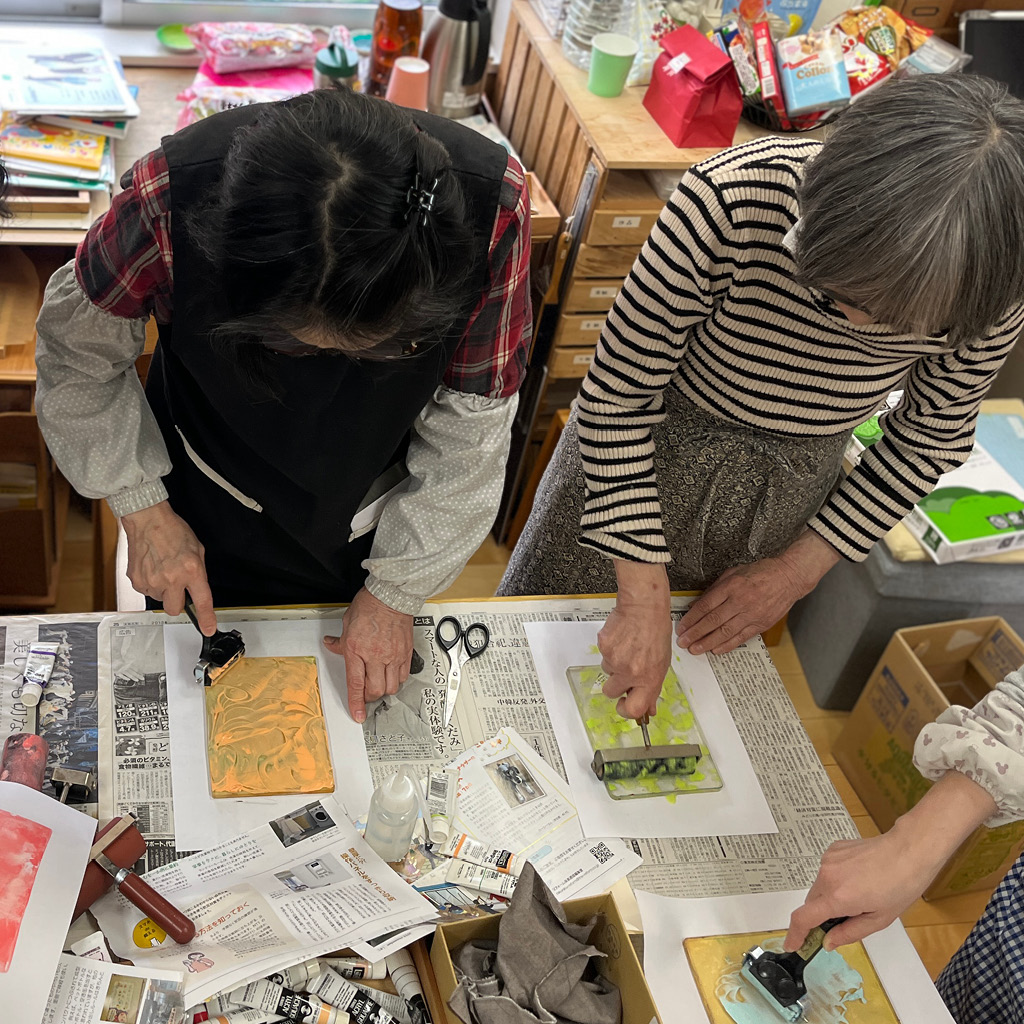
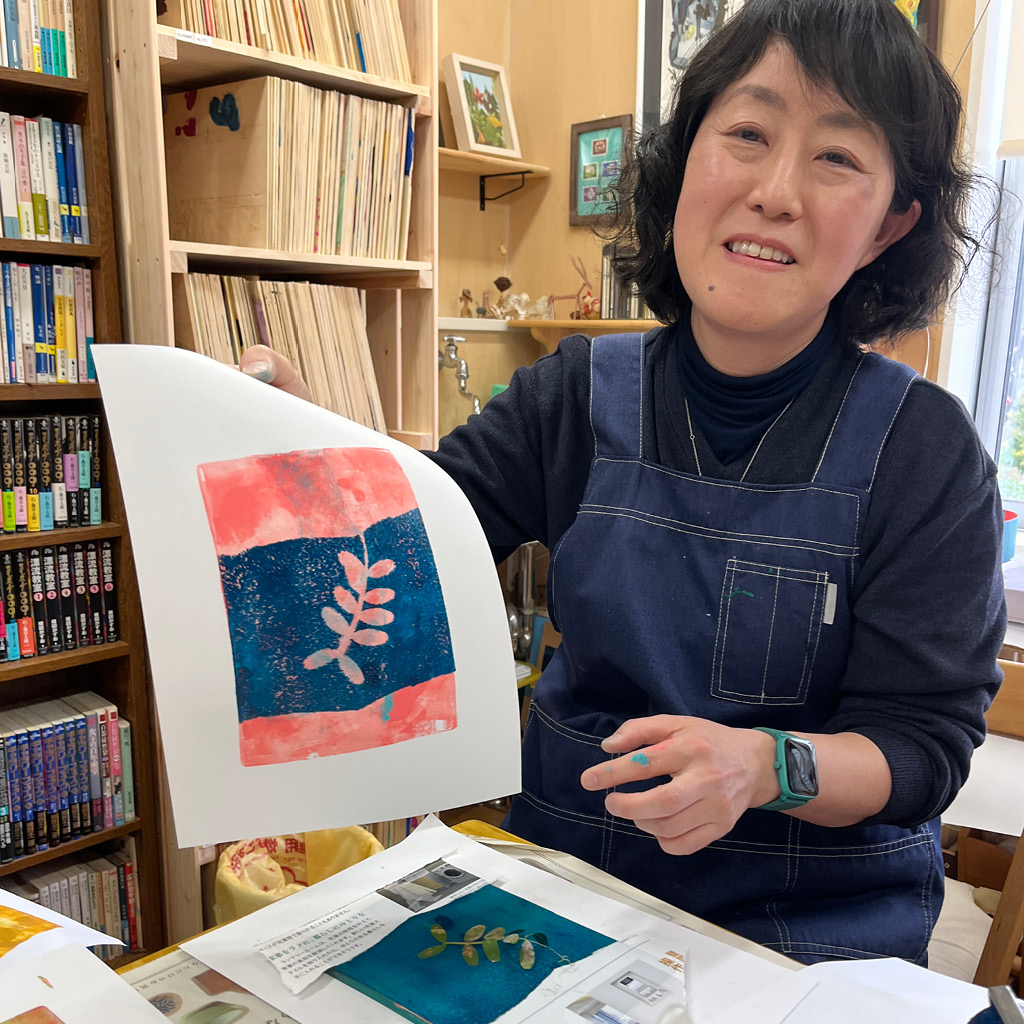
Eight professional artists gathered together, each bringing their own experience and creative perspective.
Some regularly used a shared studio, while others primarily carved and printed from dedicated corners in their homes. All were accomplished printmakers in their own right with an impressive depth of skill and craftsmanship.
What unfolded over the day was exactly why I just love sharing and empowering people.
We explored layers of colour, texture and mark-making through a series of gel plate exercises. Although language occasionally required a translation app or a few animated hand gestures, creativity needed no interpreter. Laughter, smiles, raised eyebrows, and excited cheers said everything that words could not.
By the end of the session, the tables were overflowing with prints and possibilities.
As often happens in nearly all my workshops, I eventually found myself stealing tools to force a stop for a well-earned break. Once people discover the magic of any sort of printmaking, they simply don’t want to put the brayer down! For a moment, I genuinely thought we might be embarking on a printmaking marathon.
If joy could be rolled on with a brayer, together we would have covered the tables in it that day.
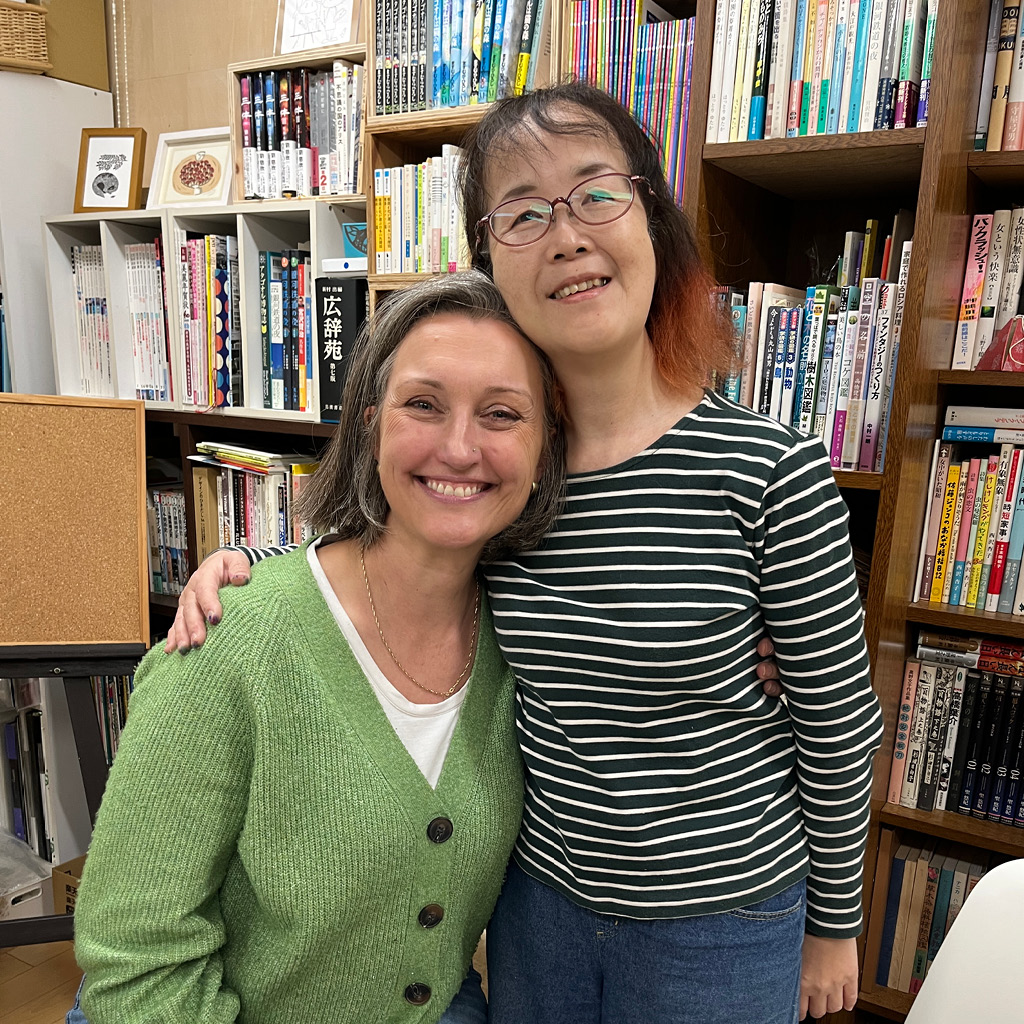
What I admire so deeply about Japanese culture is its respect for craftsmanship, patience and lifelong learning. The acts of giving and sharing techniques in return for the generosity and openness I was shown felt like a genuine exchange between artists rather than a one-way lesson. It reinforced my belief that creativity knows no boundaries and has an incredible ability to bridge languages and cultures.
If you’re looking to introduce your studio or printmaking group to gel plate monoprinting or any other technique, I’d love to share what I know.
Whether your workspace is a spacious workshop or simply a kitchen table, these techniques invite experimentation, conversation and delight, and there is nothing I enjoy more than watching someone (or a group) realise they’ve created something they never thought possible.